
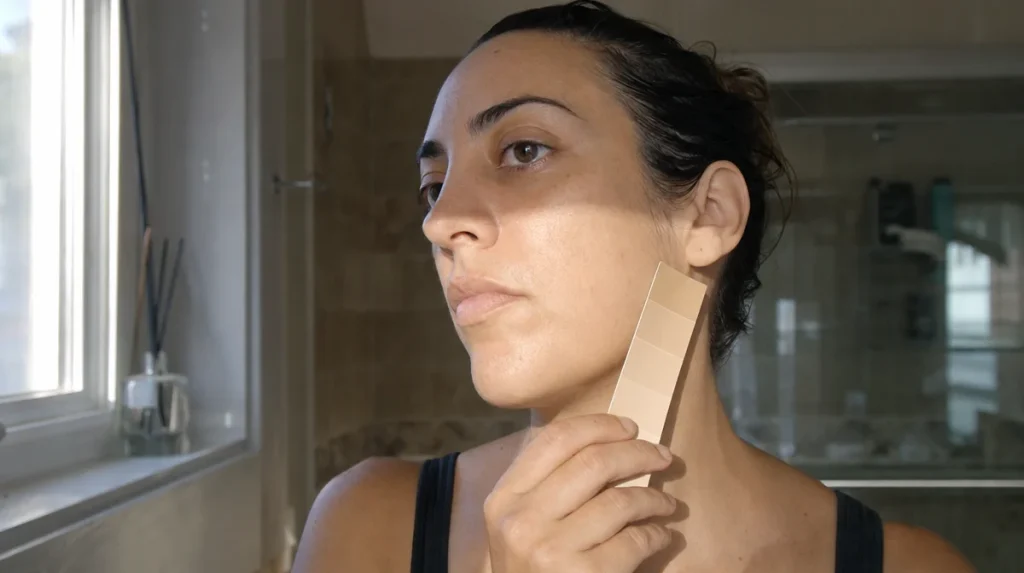
Rachel Tomlinson, Beauty Editor.
You are standing at the bathroom mirror with three half-used bottles lined up on the counter, none of them quite right. One oxidized orange by noon. One settled into every pore around your nose. One looked perfect in the store and gray by the time you got to the car. So you type the question into your phone anyway: what actually works.
Here is the fact that changes how you shop: “full coverage” is not a regulated term. No agency defines how much pigment a foundation has to carry to earn that label. A brand can print it on a bottle that behaves more like a tinted moisturizer. This guide will not tell you which bottle to buy. It will teach you to read a formula, test it honestly on your own face, and know within five minutes of wear whether it is going to hold up through your actual day, whether that day is a humid subway platform in July or a dry, overheated office in January.
- Undertone is not the same as skin tone, and swatching on your wrist instead of your jaw is the single most common reason a match fails.
- “Full coverage” is marketing language, not a legal standard, so the order of ingredients on the back of the bottle tells you more than the words on the front.
- More product does not equal more coverage once a formula hits its pigment ceiling. Past that point you are only adding texture, not opacity.
Finding Your Undertone In Daylight
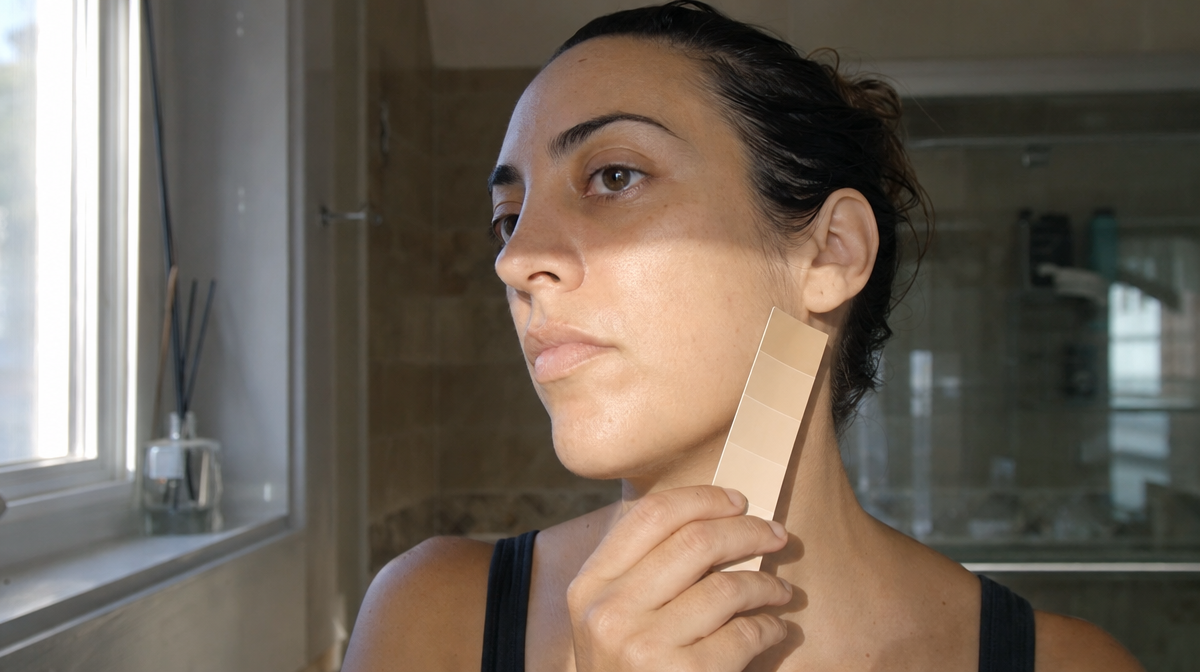
Undertone is the color underneath your skin, the thing that decides whether a shade reads warm, cool, or neutral once it settles. Skin tone is just how light or deep you are: fair, light, medium, tan, or deep. Two women can share a tan skin tone and need completely different foundation formulas because one runs warm and one runs cool underneath it.
Think of it the way a paint store thinks about color chips. A chip that looks perfect under the store’s fluorescent lights can turn pink or green once it is on your actual wall at home. Your face works the same way. Store lighting and phone-camera lighting both lie.
The most reliable test costs nothing: stand near a window in daylight, no makeup, and look at the veins on your inner wrist. Blue or purple veins usually mean a cooler undertone. Green veins usually mean warm. A mix of both usually means neutral, which is the most common undertone and also the hardest one to shop for, since it is often labeled inconsistently across brands.
A 2021 study in the Journal of Cosmetic Science, which surveyed roughly 200 consumers on shade-matching accuracy, found that most people misjudge their own undertone under indoor artificial light, and that the mismatch becomes visible within the first few hours of wear as the product oxidizes. That single detail explains a lot of foundation regret.
Skip the back-of-hand swatch entirely. The skin on your hand sees more sun and calluses differently than your face does, so it is almost never the same tone. Swatch along your jawline instead, in daylight, and check it again after fifteen minutes before you decide.
Reading The Label Without The Marketing Noise
Cosmetic labels list ingredients in descending order by concentration, with anything under 1 percent allowed to appear in any order at the end. That rule, set by federal labeling requirements, is the closest thing you have to a truth serum on a foundation bottle.
If you want to gauge real coverage, look for where pigments sit on that list: titanium dioxide, iron oxides, or mica. If they appear in the first third of the ingredient list, the formula is carrying real pigment load. If they show up near the bottom, past a long list of water, silicones, and emollients, the bottle is likely closer to a tinted moisturizer no matter what the front label promises.
The Good Housekeeping Institute, which has lab-tested beauty products for its readers for more than a century, has noted publicly that coverage terms like “full” or “buildable” carry no legal definition in cosmetics labeling. Brands choose those words freely. That does not make them dishonest, but it does mean the label is marketing copy, not a lab result.
A simple habit fixes this: before you buy, find the ingredient list, not the front-of-box claim, and look for where the pigments sit. It takes fifteen seconds in a drugstore aisle and it tells you more than any headline on the packaging.
The Three-dot Swatch Test
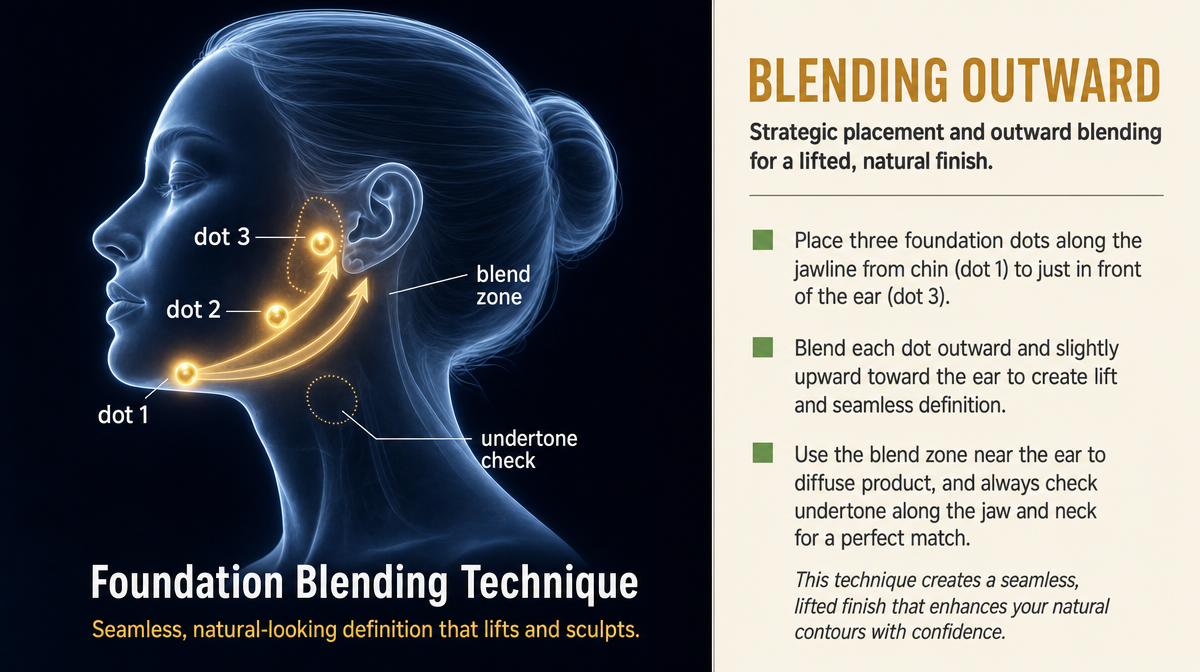
Most people swatch a single stripe on the back of their hand and call it done. That tells you almost nothing about how a foundation will behave on an actual face, where oil production, texture, and temperature vary by the minute.
Try this instead. Place three small dots along your jawline, spaced about an inch apart, using your ring finger rather than a sponge or brush. Blend each dot outward toward your ear, not toward your nose, so you can see how it transitions into your neck. Wait ten minutes without touching your face.
What you are watching for: does one dot disappear into your skin while the others sit on top like a mask. Does the color shift as it meets air, which is oxidation, a normal chemical reaction between certain pigments and your skin’s own oils. Does it look chalky in photos taken near a window, a sign the formula contains too much light-reflecting mica for your skin’s natural sheen.
A foundation that passes this test in a bright bathroom will behave differently on a humid August platform or in an overheated office in February. That is expected. The three-dot test is not a guarantee, it is a filter, meant to eliminate the obviously wrong matches before you commit real money to a bottle.
Why Texture Matters More Than The Coverage Number
Two foundations can claim identical coverage and feel completely different on skin, because coverage is only half the formula’s job. The other half is texture: how the product sits, moves, and finishes once it has settled.
Think of foundation the way you’d think about house paint. A thick, high-pigment paint can still look uneven if the base coat underneath it is patchy or the wrong sheen. The pigment does the covering, but the vehicle, the oils, silicones, and water that carry that pigment, decides whether the result looks like skin or like spackle.
Silicone-heavy formulas tend to blur texture and pores, which reads beautifully in photos but can sit heavily on very dry skin, emphasizing flaky patches instead of hiding them. Water-based formulas tend to feel lighter and sink in faster, which suits oilier skin types but can require more frequent touch-ups through a humid day.
Neither is better in the abstract. The mistake is choosing a formula because it promised the highest coverage number without asking whether its texture matches your skin’s actual behavior, dry, oily, combination, or somewhere shifting between seasons, drier in a heated apartment through January and oilier by August.
The Application Mistakes That Build A Mask Instead Of A Finish
Almost every complaint about foundation looking “heavy” traces back to application, not the product itself.
The most common mistake is applying too much at once. A dollop the size of a dime, applied all over the face before blending, forces you to spread thick product across areas that never needed full coverage, like your forehead or chin, just to even out one blemish near your nose. Dot-and-build, using small amounts only where needed, almost always looks more natural than one even layer everywhere.
The second mistake is skin prep, or the lack of it. Foundation grips onto dry, flaky patches and separates around them within an hour. A damp sponge, rather than a dry one, also changes the outcome significantly: dry sponges absorb product and leave streaks, while a damp one presses pigment into skin evenly.
The third mistake is stopping at the jawline. Foundation that ends abruptly at the jaw creates a visible line, especially in daylight or flash photography, because the neck rarely matches the face in tone once you factor in sun exposure. Blending a thin layer down into the neck and up into the hairline avoids the demarcation entirely.
None of these fixes cost anything beyond a few extra minutes. They matter more than which bottle sits on the counter.
Setting It To Survive A Humid Commute Or A Dry Winter Office
Climate changes what “long-wearing” actually means. A foundation that performs beautifully in a dry, heated office in January can slide off by noon on a humid East Coast platform in July, and the reverse is just as true.
In humidity, oil production increases and setting powder does real work: a light, translucent dusting through the T-zone, pressed rather than swept, holds foundation in place far longer than spray alone. In dry winter air, especially with indoor heating running for months, powder can settle into fine lines and emphasize dryness instead of controlling shine, so a setting spray or simply skipping powder in dry areas tends to hold up better.
Touch-up habits should shift with the season too. A pressed powder compact in a bag makes sense for a humid commute where midday shine is the enemy. A hydrating mist makes more sense once the heat comes on at home and skin starts pulling moisture from anywhere it can, including a foundation layer that was flawless at 8 a.m.
The practical test: wear a foundation through one full humid day and one full dry, heated day before deciding it works. A single bathroom test under store lighting cannot predict either extreme.
Knowing When More Product Stops Helping
Every foundation formula has a pigment ceiling, the point at which its coverage has maxed out and additional layers stop building opacity. Past that point, you are not adding coverage, you are adding thickness, and thickness is what eventually looks cakey, settles into fine lines, and cracks by the afternoon.
A useful visual check: apply your normal amount, wait five minutes, then look closely at any area that still shows discoloration, usually around the nose or under the eyes. If a second thin layer in that spot evens it out, that is legitimate buildable coverage. If a second layer changes nothing except the way light bounces off your skin, you have already hit the ceiling and a concealer, applied only where needed, will do more than a third layer of foundation ever will.
This distinction matters most for anyone shopping during a big haul moment, a Black Friday drugstore trip or a back-to-school stock-up, when it is tempting to buy the most “full coverage” bottle on the shelf assuming more is always safer. More pigment only helps up to the point your skin’s texture can absorb it evenly. Beyond that, a lighter formula paired with targeted concealer usually looks more finished in photos and in person.
When Full Coverage Is The Wrong Tool For The Job
Full coverage solves a specific problem: uneven pigmentation, visible redness, or scarring that needs to be neutralized rather than softened. It is not automatically the right choice for every face or every day.
On visibly textured or very dry skin, heavier formulas can settle into fine lines and enlarged pores, making texture more noticeable rather than less, an effect dermatologists sometimes describe as the product “sitting on top” rather than blending into the skin. The American Academy of Dermatology’s general guidance on skin care routines notes that keeping skin well hydrated before makeup application helps any foundation formula perform more evenly, which is a reminder that the skin underneath matters as much as the product on top of it.
For everyday wear where the main goal is evening out tone rather than concealing scarring, a lighter or medium-coverage formula, built up only where needed with concealer, often photographs and wears better through a full day than a heavy full-coverage base applied everywhere out of habit.
The honest question to ask before buying anything: what specifically am I trying to cover, and does it need full coverage everywhere, or just concealer in two or three spots. Most days, it is the second answer.
Key Takeaways
Undertone is found in daylight, never on the back of your hand. Ingredient order tells you more about real coverage than the words on the front of the bottle. Texture, not just pigment, decides whether a formula reads as skin or as a mask. Every formula has a pigment ceiling, and layering past it adds thickness, not coverage. Climate changes what “long-wearing” means, so test any foundation through both a humid day and a dry, heated one before judging it. Full coverage is a tool for specific problems, not a default setting for every day.
A Quick Checklist Before You Buy
- Swatch along the jawline in daylight, not on your hand, and wait ten minutes before judging the match.
- Check the ingredient list for where pigments (titanium dioxide, iron oxides, mica) fall, not just the front-of-box claim.
- Test with the three-dot method and watch for oxidation or chalkiness after ten minutes untouched.
- Prep skin with hydration first; dry patches grab product unevenly no matter how good the formula is.
- Wear it through one humid day and one dry, heated day before deciding it earns a spot in your routine.
- If a second layer only adds thickness and not opacity, reach for concealer instead of a third layer.
This article is general information and does not replace personalized advice from a dermatologist or licensed esthetician.
Individual skin type, climate, and application technique affect results, and results may vary.