
David Okafor, Senior Health and Science Editor.
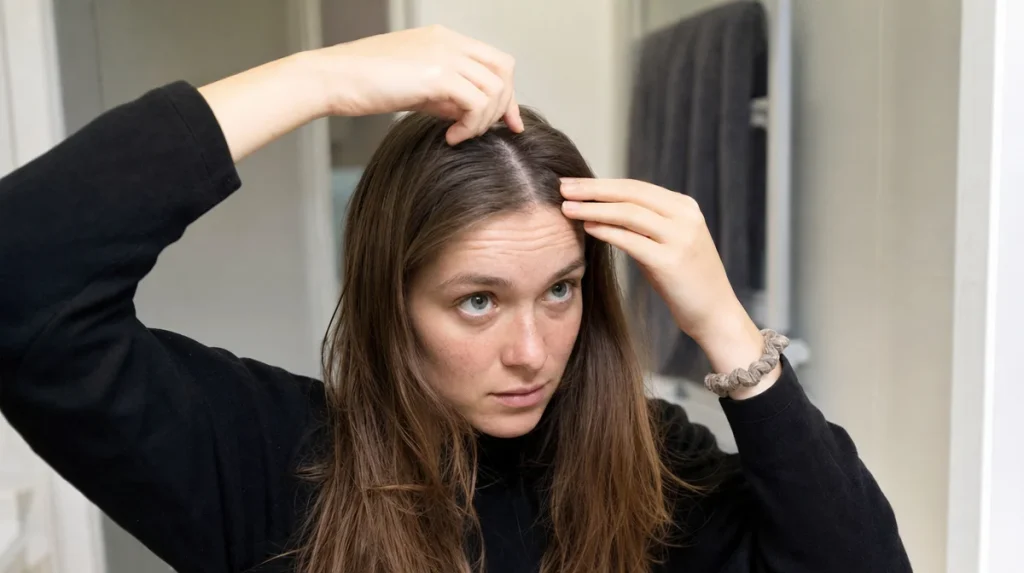
You catch your reflection in the elevator mirror around two in the afternoon and the roots look flat, faintly greasy at the crown, the opposite of how they looked leaving the house. So you type the question half the country has typed into a search bar: does dry shampoo actually work, or is it just powder and hope in a can. The honest answer is that it works, but only when the timing, the formula, and the technique line up, and most routines get at least one of those wrong. Dry shampoo doesn’t clean hair. It absorbs oil sitting on the scalp the way a paper towel lifts water off a counter, which is a genuinely useful trick, but only if you understand what it can and can’t do before you reach for the can.
- Timing beats quantity: applying dry shampoo the night before, not the morning you need it, gives the formula hours to absorb oil instead of racing it.
- The right formula depends on your hair color and texture, not the claims on the label; a white-cast powder on dark roots is a formula mismatch, not a technique failure.
- Buildup, not oil, is the real limit on how long a routine lasts; reapplying on top of yesterday’s residue dulls hair faster than skipping a day and just washing.
What Dry Shampoo Is Actually Doing To Your Roots
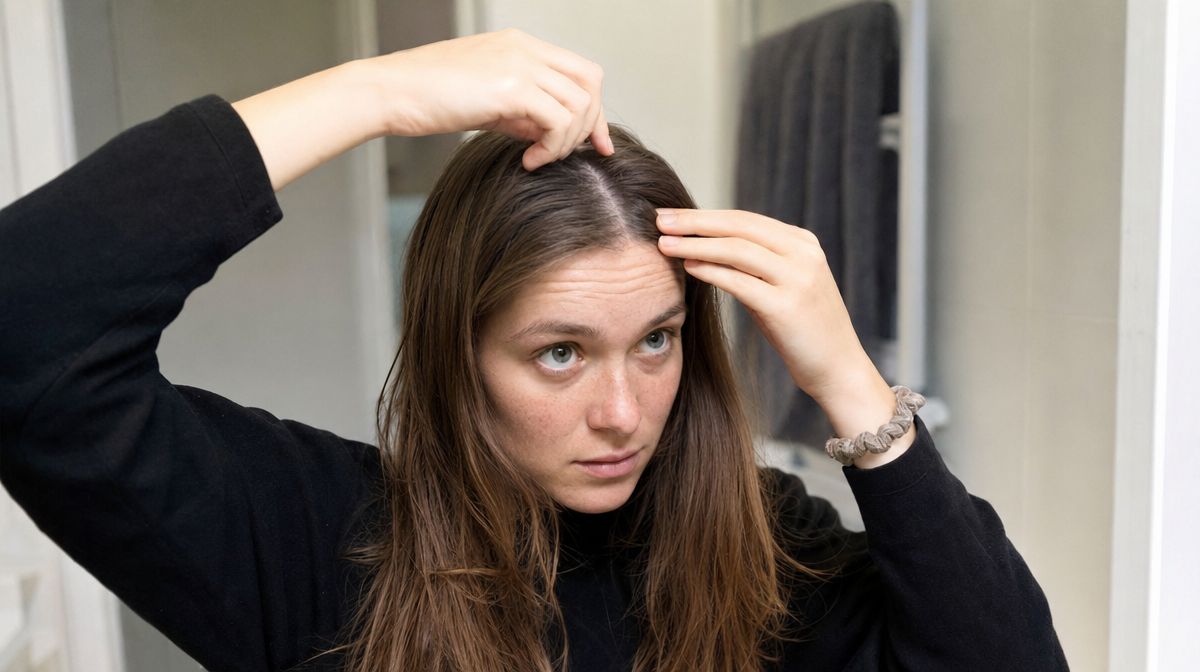
Dry shampoo doesn’t clean hair. It manages oil, and the difference matters more than the marketing on the can admits.
Most formulas rely on rice starch, oat starch, or kaolin clay, fine particles that sit on the hair shaft and grab loose sebum the way a paper towel lifts water off a counter. The paper towel doesn’t scrub the counter clean, it just moves the liquid off the surface and onto itself. Dry shampoo works the same way: it doesn’t dissolve oil, it absorbs it, and it stays in the hair until the next real wash.
A 2023 study in the Journal of Cosmetic Science measured sebum absorption rates across starch and clay bases and found that particle size, not fragrance or added actives, predicted how quickly a formula visibly reduced surface shine. Finer particles absorbed faster but also built up faster over repeated days without washing.
That buildup is the part most routines get wrong. Reapplying a fresh layer on top of yesterday’s residue doesn’t refresh hair, it just adds another layer of starch to hair that already has some. By day three or four of skipped washes, many women notice a dullness or slightly grayish cast at the roots, and reach for more product instead of recognizing it as the sign to actually wash.
Understanding that dry shampoo is a stopgap, not a substitute, changes how you use it: less as a daily habit, more as a tool deployed at the right moment.
Matching The Formula To Your Hair Color And Texture
Powder, aerosol, and foam versions all do the same basic job, but they behave differently depending on hair color and thickness.
Loose powders and clay-based sticks give the most control since you apply exactly where needed, which matters most for fine or light-colored hair, where a heavy aerosol cloud can leave a chalky cast at the part. Aerosol sprays disperse more evenly across larger sections, which suits thicker or coarser hair that needs oil control over a wider area, but the fine white mineral dust inside the can is also what causes the visible residue that has long dogged the format.
For dark hair, that residue problem is worse, since white powder against brunette or black roots shows immediately under any light. Most major drugstore and prestige lines now sell tinted versions formulated closer to medium, tan, or deep shade ranges, using iron oxide pigments instead of plain starch to blend in. Fair and light shade versions still rely on the original white base, since it disappears against pale roots without tinting.
Texture matters too. Curly and coily hair often does better with cream-to-powder hybrids or lightweight foams, since traditional powders can sit on the surface and read as dull rather than absorbing evenly through denser strands. If your dry shampoo leaves a visible cast no matter how little you use, the formula, not your technique, is usually the problem, and it may be worth testing a version built for your color range before assuming the whole category doesn’t work for you.
The Application Method That Actually Holds
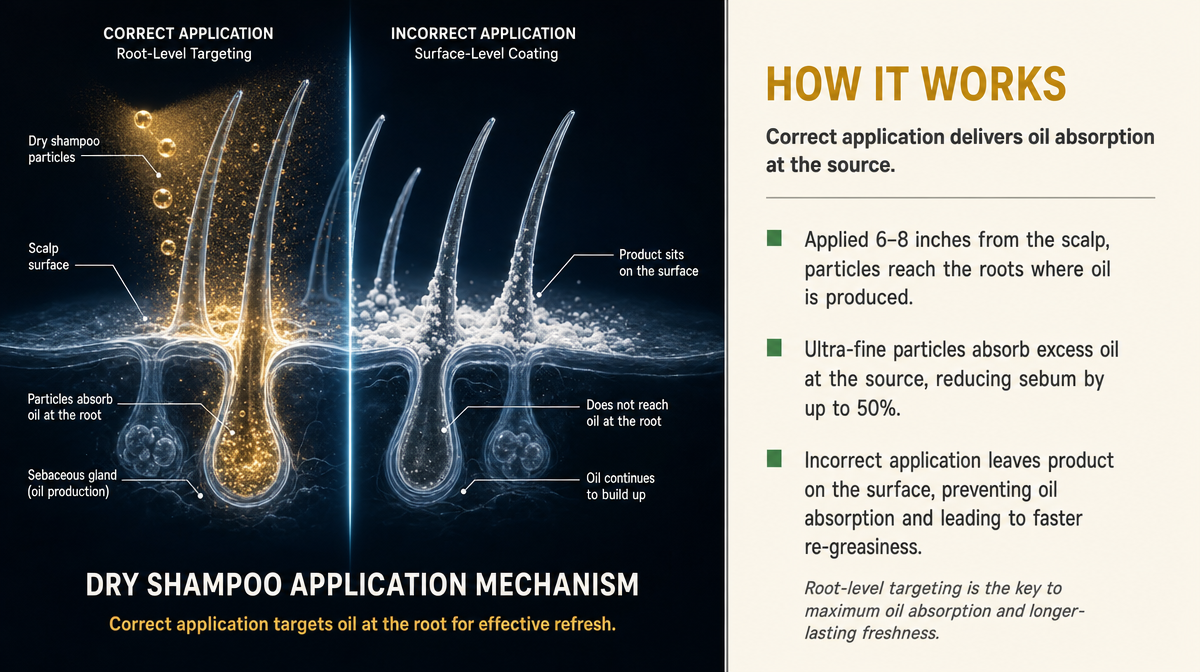
The instructions on the can rarely mention the two steps that make the biggest difference: timing and pressure.
Apply dry shampoo the night before, not the morning of. Overnight, natural head movement and pillow friction help distribute the powder through the roots and let it fully absorb oil that would otherwise still be sitting wet on the scalp come morning. Applied first thing before leaving the house, dry shampoo has to work on oil that hasn’t finished collecting yet, which is part of why it can feel less effective by early afternoon.
Section the hair in one to two inch partings rather than spraying blindly through a ponytail. Hold the can roughly six to eight inches from the scalp, closer for powders, and apply in short bursts rather than one long spray, which tends to overload a single spot.
Then wait. Most people brush or massage the product in within seconds of spraying, before the starch has had a chance to bind with the oil on the scalp. Giving it roughly a full minute before working it in with fingertips or a boar bristle brush allows the absorption to actually happen, rather than just distributing wet product through dry lengths.
Finally, brush thoroughly, not just at the crown. A few strokes from root to end redistributes any remaining powder evenly and knocks loose the visible white flecks that give dry shampoo away. Skipping this step is one of the most common reasons a formula that tested fine on the back of your hand looks chalky once it’s actually in your hair.
Mistakes That Undo The Whole Effort
The single most common mistake is treating dry shampoo as a once-a-day fix applied right before walking out the door, which works against the product’s own mechanism.
The second is concentrating all of the product at the crown, since that’s where oil shows first, and ignoring the rest of the part line and hairline, where oil also collects but is less visible in a quick mirror check.
The third is quantity. More product does not mean more oil control past a certain point, it just means more starch sitting in the hair, waiting to turn dull and slightly gray by the second or third day. A light, even layer worked in fully outperforms a heavy cloud left unbrushed.
The fourth mistake is skipping the massage step entirely and relying on the spray alone to do the work. Fingertip massage at the scalp does more to distribute and activate the powder than the spray nozzle ever will on its own, since it works the particles down into the roots rather than leaving them sitting on top of the hair shaft.
Building It Into A Real Weekly Routine
A dry shampoo routine that holds up in daily life usually means treating it as a bridge between two or three washes, not a replacement for washing altogether.
Climate changes the math. Humid East Coast summers push scalps toward more oil production and faster buildup, so most people find dry shampoo buys them one extra day at most before hair needs an actual wash. Dry winter air and indoor heating tend to strip moisture and slow oil production, which is why the same routine that gets you through a single humid August day might stretch to two or three days in January without looking flat.
A workable pattern for most hair types: wash at night, apply a light layer of dry shampoo to day-two roots before bed, then a slightly heavier touch-up the next morning only where needed, usually the crown and part. By day three, most formulas are visibly reaching their limit, and reapplying on top of existing buildup instead of washing tends to backfire.
Texture spray or a light gel at the roots on day one can also reduce how much oil accumulates by day two, since it gives hair some grip and lift rather than letting it lie flat against the scalp where oil spreads fastest.
Judging Results: How Long It Should Last And When To Actually Wash
A good application should visibly reduce shine and add texture at the roots for most of a day, not just the first hour after spraying.
If you’re reapplying multiple times before noon, the formula, the amount, or the technique is off, not your hair. The American Academy of Dermatology’s public guidance on scalp care notes that itching, flaking, or a tight feeling at the scalp are signs to wash and address scalp health directly rather than layer on more product, since dry shampoo can mask early signs of an irritated or overly dry scalp along with the oil.
A useful rule: if your scalp itches under the powder, or if hair still looks or feels waxy even right after a fresh application, that’s the cue to wash, not to spray again. Dry shampoo works best as a tool you reach for occasionally to stretch time between washes, not as a way to avoid washing altogether, and treating persistent dullness or itch as a signal rather than an inconvenience keeps both hair and scalp healthier over time.
What Matters Versus What Is Marketing Language
Terms like volumizing, detoxifying, or clean on a dry shampoo label describe positioning more than performance. Volumizing formulas typically just include a slightly coarser starch that adds texture, which can look like more body but isn’t adding any actual volume to the strand itself. Detox claims generally refer to added charcoal or clay, ingredients that do absorb oil somewhat but not meaningfully differently from a well-formulated starch base.
Good Housekeeping Institute’s beauty lab has spent years testing aerosol sprays specifically for even spray pattern and residue, an old problem in the format that better nozzle engineering has only partly solved. That kind of testing, spray pattern, particle fineness, and how visible the cast is on different hair colors, matters more to how a product performs day to day than any ingredient the label highlights in bold.
What actually predicts performance: particle size (finer absorbs faster but builds up faster), added fragrance load (more fragrance can irritate a sensitive scalp without improving oil control), and whether the formula includes a tinting agent matched to your hair color. Everything else on the label, the botanical names, the percentages, the claims about strengthening or repairing hair, has little to do with what dry shampoo is actually built to do, which is absorb surface oil.
A 30-Second Self-test For Buildup
Before your next wash day, run one finger firmly along your part line and then rub your fingertip and thumb together. A slightly powdery, dry residue is normal and expected. A waxy or slightly gritty film that doesn’t rub away easily is a sign of buildup, meaning the last several applications sat on top of each other rather than being fully brushed through or washed out.
You can run the same test at your crown, where most people apply the heaviest layer, and compare it to the nape of your neck, where oil control usually holds up longer since less product typically gets applied there. If the difference is dramatic, the fix isn’t more product at the crown, it’s less; a lighter, evenly distributed layer, plus a full brushing pass, will generally outperform a heavy, unblended one by the end of the day.
Key Takeaways
Dry shampoo absorbs oil, it doesn’t clean hair, so it works best as a bridge between washes rather than a substitute for washing. Apply it the night before for the best results, not the morning you need it. Match the formula, not just the price point, to your hair color and texture, since a white cast or waxy buildup usually points to the wrong product rather than the wrong technique. Watch for itching, flaking, or a waxy feel at the scalp as your cue to wash, not to reach for more powder.
A Simple Checklist
- Apply the night before wash day, not the morning of
- Section hair into one to two inch partings before spraying
- Hold the can six to eight inches away and wait about a minute before brushing
- Brush from root to end, not just at the crown
- Choose a tinted formula if your roots are medium, tan, or deep
- Run the fingertip test at your part line before assuming you need more product
- Wash instead of reapplying if your scalp itches or feels waxy under the powder
This article is for general information and does not replace advice from a dermatologist or your own stylist.
Individual results vary depending on hair type, scalp condition, and climate.