
Rachel Tomlinson, Beauty Editor.
You’ve reapplied lipstick three times before noon and it’s already gone by your second coffee. Or it hasn’t worn off at all, it’s crept into the fine lines around your mouth, leaving a faint ring nobody warned you about. Maybe you’ve stood at a drugstore endcap turning tube after tube in your hand, reading “up to 16 hours” on the label and wondering what that number is even measuring.
Here’s the fact that changes how you shop: most long-wear formulas aren’t waxier versions of your old lipstick, they work through a completely different mechanism, a thin flexible film that bonds to the lip surface the way a coat of nail polish bonds to a nail. Once you understand that, the rest of the label starts to make sense, and so does why some “holy grail” formulas fail on you while they work fine on your friend. This guide walks through what’s actually happening on your lips, how to test a formula before you commit to it, and how to tell real performance from marketing language.
- Long-wear formulas work by forming a thin polymer film, not by adding more wax, which is why they behave more like a stain than a balm.
- Dry, flaky lips wreck long-wear formulas before they even set, so prep matters more than the product itself.
- “Transfer-proof,” “smudge-proof,” and “waterproof” are three different claims, and a label using one doesn’t guarantee the others.
Finding Your Undertone In Daylight
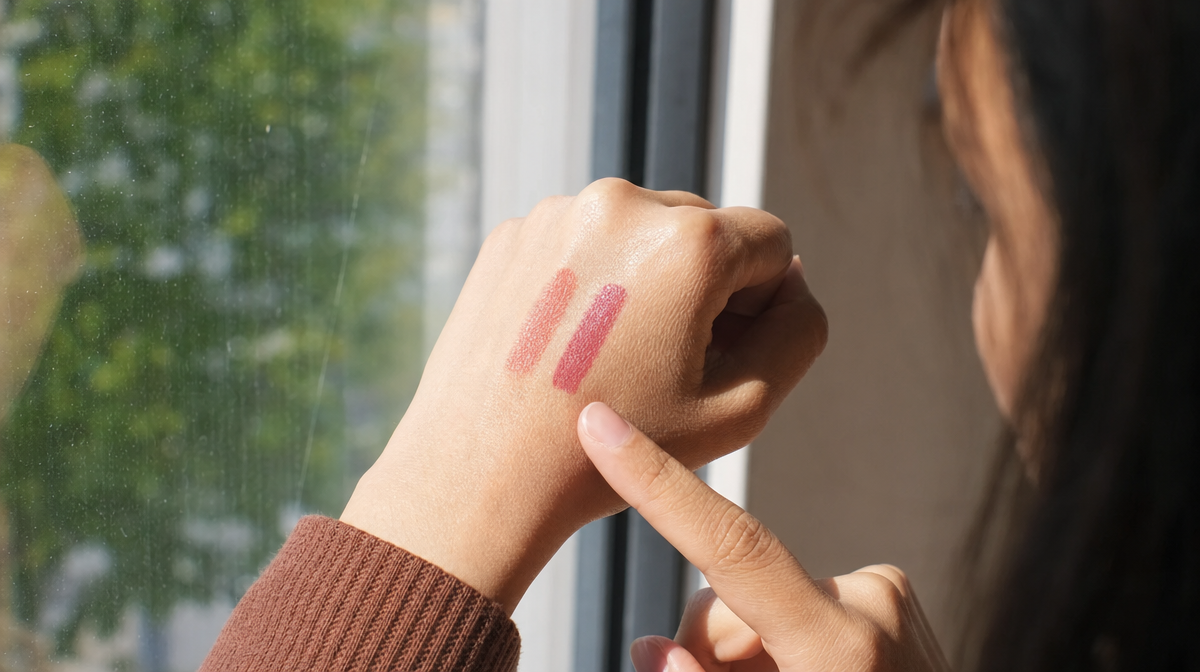
Store lighting lies. Fluorescent bulbs push everything toward yellow or blue, so a shade that looks flattering under an Ulta ceiling light can turn muddy or chalky the second you step outside.
Undertone, not color intensity, is what decides whether a shade reads as flattering or off. Think of it the way you’d think about matching paint to a wall: the chip looks perfect under the store’s lighting, then looks wrong once it’s on your actual wall in daylight. Your lips work the same way.
The quick self-test: swipe a small amount on the inside of your wrist, then walk to a window or step outside for ten seconds. If the color looks orange or brassy against your skin, you’re likely testing a warm shade against cool undertones, or the reverse if it looks flat and gray. Checking the veins on your inner wrist in daylight is a rough but useful cross-check: greenish veins usually mean warmer undertones, bluish veins usually mean cooler ones.
The mistake most people make is buying under store lighting and never retesting at home. A lipstick that seemed neutral under fluorescents can look distinctly warm or cool once you’re back in your bathroom mirror, and by then the return window has often closed. Testing outside, even briefly, before you buy saves you from a drawer of barely-used tubes that never quite matched.
What “Long-wear” Actually Means On Your Lips
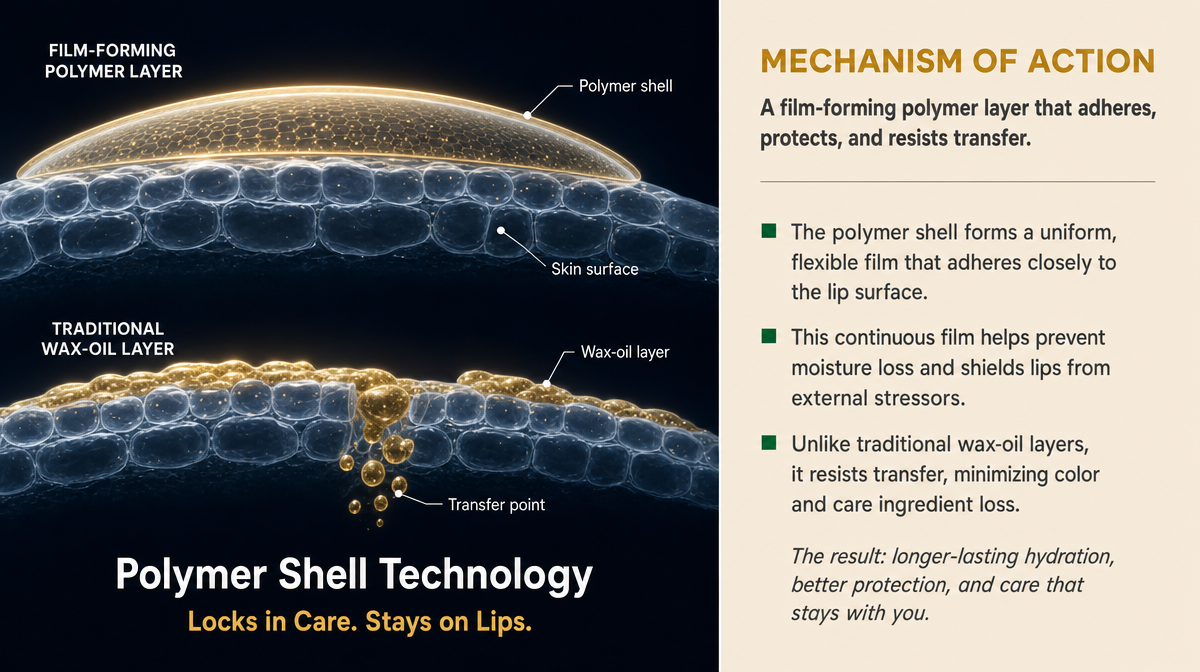
Traditional lipstick sits on top of the lips in a soft layer of wax and oil, similar to a smear of butter on toast: it feels good, but it transfers to anything it touches, a coffee cup, a napkin, a collar.
Long-wear formulas, especially liquid mattes, work differently. They rely on film-forming polymers suspended in a fast-evaporating carrier. Once the carrier evaporates, the polymer dries into a thin, flexible shell that grips the surface of the lip rather than resting loosely on top of it. That’s closer to a coat of nail polish than a smear of butter: it dries into something closer to a stain-plus-shell than a soft, movable layer.
This explains two things readers often find confusing. First, why long-wear formulas feel tighter or drier as they set: the polymer is literally hardening. Second, why they don’t transfer the way a traditional bullet lipstick does, there’s no loose oil layer left to smudge onto a glass.
It also explains the tradeoff. A flexible film can crack if lips are very dry, and once it cracks, it doesn’t wear evenly, it flakes. A well-formulated long-wear lipstick balances polymer with enough emollient to keep the film flexible; a poorly balanced one prioritizes wear time over comfort and cracks by midafternoon.
The Prep Mistakes That Undo A Good Formula
Most long-wear disappointments trace back to what happened before the lipstick, not the lipstick itself.
Applying a film-forming formula to dry, flaky lips is the single biggest mistake. The polymer seals over rough patches instead of smoothing them, so the finish looks patchy within an hour, and the flakes it sealed in eventually lift the film with them when they shed. A gentle lip exfoliation, even just a damp washcloth in circular motion, the night before matters more than most people assume.
The second mistake is skipping a light balm underneath and expecting the formula to moisturize on its own. Long-wear formulas are designed to grip and hold, not to hydrate, that’s a different job entirely. Letting a balm absorb for a minute or two before applying color gives the polymer a smoother surface to bond to.
The third mistake is blotting too aggressively right after application. Blotting removes excess pigment before the film has finished setting, which is usually within 60 to 90 seconds, and can pull the whole layer off unevenly rather than leaving a clean base. Letting the first coat set fully before deciding whether a second coat is needed produces a more even, longer wearing result than rushing straight to layer two.
Running Your Own Wear Test At Home
You don’t need a lab to judge a long-wear claim, you need a clock and your actual day.
Apply the lipstick as you normally would, then note the time. Check it after eating something with a bit of oil, a slice of pizza or buttered toast, and after drinking from a glass rather than a straw. Note whether color transfers to the glass rim, and how much. Check again at the two, four, six, and eight hour marks, comparing how the color looks in the center of your lips versus at the edges.
What you’re looking for is the pattern of the fade, not just how much color is left. A well-made formula tends to fade evenly, like a stain lightening uniformly, leaving a soft, still-flattering version of the original shade. A poorly made one fades in patches, disappearing from the areas that touch a cup or a fork first while staying dark in the corners, which reads as unkempt rather than simply lighter.
Feathering, the fine lines of color that creep into the skin just outside the lip line, tends to show up later in the day and is more common on dry lips or lips without a liner base. If you see feathering by hour two, that’s usually a sign the lips were under-prepped rather than a flaw in the formula itself.
Where Cheaper Formulas Actually Cut Corners
Cost differences in long-wear lipstick usually show up in three places, and none of them are mysterious.
Pigment load is the first. Lower-cost formulas often use less concentrated pigment, which means the color looks fine on application but fades faster and less evenly, since there’s simply less material to hold on to the lip surface over hours.
Polymer quality is the second. Cheaper polymer blends tend to be more brittle, which is why some budget matte formulas crack or flake by midday rather than wearing down smoothly. A 2023 study in the Journal of Cosmetic Science examining long-wear lip formulations found that polymer flexibility, not polymer quantity, correlated most closely with even wear and lower rates of visible flaking over an eight-hour test window.
Emollient content is the third, and it’s the one shoppers notice fastest, as comfort. Formulas that skip enough conditioning oil to keep the film flexible tend to feel tight or drying within the first hour, which is often the actual reason a lipstick gets abandoned in a drawer, not the wear time itself.
None of this means an inexpensive lipstick is automatically inferior. Some drugstore formulas manage the balance well, and some prestige formulas skimp on emollient to chase a higher wear-time number on the label. Judging the formula on how it actually behaves, using the test above, tells you more than the price tag does.
What Matters Versus What’s Marketing Language
“Transfer-proof,” “smudge-proof,” and “waterproof” sound interchangeable on packaging, but they describe different behaviors, and a formula that excels at one can fail at another.
Transfer-proof means the formula resists coming off onto other surfaces, cups, collars, masks. Smudge-proof usually refers to resistance against light rubbing, a hand brushing the mouth. Waterproof means the formula holds up against direct water contact, which matters far less for most daily wear than the other two. A lipstick can be genuinely transfer-resistant and still smudge if you rub your lips together right after application, because the film hasn’t finished curing yet.
“Up to 16 hours” and similar numbers are usually measured under controlled lab conditions: no eating, no drinking, minimal touching. That’s a legitimate way to measure a formula’s baseline durability, but it’s not a promise about your actual Tuesday. Reading these numbers as a ceiling rather than a guarantee sets more realistic expectations.
Ingredient lists tell you more than adjectives do. Look for named film-formers (often listed under polymer or copolymer names) alongside an emollient like a plant oil or ester rather than a vague claim of “long-lasting formula” with no ingredient to back it up. The American Academy of Dermatology’s general guidance on lip care also notes that lips lack oil glands and dry out faster than the rest of the face, which is one more reason a formula’s emollient content deserves as much attention as its wear-time claim.
Judging Fade Honestly, Hour By Hour
Realistic expectations make a good formula feel like a win instead of a letdown.
In the first two hours, expect full, even color. Between hours two and six, most well-made formulas soften slightly in the center of the lips, the area that touches cups and food most, while holding closer to full strength at the outer edges. That’s normal wear, not failure.
What separates a good formula from a poor one at this stage is uniformity. A soft, even lightening across the whole lip still looks intentional, almost like a natural lip tint. Blotchy fading, darker at the corners and nearly gone in the center, looks unfinished and is usually the sign of an uneven polymer film or a color applied too thin in spots.
After six hours, some feathering at the lip line is common, especially without a liner underneath. Using a liner in a shade close to your natural lip color, applied lightly over the whole lip rather than just the outline, gives the color film something more even to grip and reduces feathering later in the day.
By hour eight or beyond, most long-wear formulas have moved from a full-coverage layer to more of a stain. Judging a formula only by how vivid it looks at hour ten misses the point, the honest measure is whether the fade stayed even and whether your lips still feel comfortable, not cracked or tight.
Adjusting For The Season
The same lipstick can behave differently in July than it does in January, and that’s not the formula’s fault.
Humid East Coast summers add a layer of surface moisture and oil from sweat and skin, which can shorten wear time and increase transfer, especially for formulas already light on polymer. In these months, a slightly more matte, higher-polymer formula tends to hold up better, and blotting a fresh application once, lightly, can help set it before you head out into the heat.
Dry winters, especially with indoor heating running for months at a time, do the opposite: they pull moisture from lips faster, making the polymer film more prone to cracking and flaking. This is when a richer balm underneath, and a formula with more emollient, earns its keep. It’s also when patience with prep, letting balm absorb fully before applying color, matters most.
Fall brings its own retail moment, deeper berry and wine shades tend to show up everywhere from Sephora displays to Target endcaps around pumpkin-spice season, and Black Friday sales later in the year often prompt bigger drugstore hauls. None of that changes the chemistry, but it’s worth remembering that a shade you loved in a store display in October may need a different prep routine once the heat comes on in your apartment in December.
Key Takeaways
A long-wear lipstick isn’t a stronger version of a regular one, it’s a different type of product built around a film-forming polymer rather than a wax-oil base. Judging it fairly means testing it against your actual day, not against the number on the label.
Prep matters as much as the formula. Dry lips, skipped balm, and aggressive blotting undo good chemistry before it has a chance to work. And the marketing language on the front of the tube, transfer-proof, smudge-proof, waterproof, describes three different things, so reading the ingredient list and running your own short wear test tells you more than any of those words alone.
A Five-minute Checklist Before You Buy
- Test the shade in daylight, not under store lighting
- Check for a named film-forming ingredient alongside an emollient, not just a “long-lasting” claim on the front label
- Exfoliate and moisturize lips the night before trying a new formula
- Let the first coat set for 60 to 90 seconds before blotting or adding a second layer
- Run an at-home wear test: check color at two, four, six, and eight hours after eating and drinking normally
- Watch for even fading versus blotchy fading, that tells you more than total wear time
- Adjust formula weight for the season: more polymer in humid months, more emollient in dry, heated winter air
This article is for general information and does not replace advice from a dermatologist.
Individual results vary depending on skin type, formula, and application habits.